I stood outside the auto shop this morning, phone in hand, staring at the painted door in front of me. Business name. Website. Phone number. Hours. The usual stuff.
I snapped a photo and sent it to Eedi, my AI chief of staff: “Create a contact in the CRM, please.”
Before I jumped into the approaching Uber, Eedi had already completed the following tasks:
Contact Creation: Logged the record in the custom CRM she built.
Research: Visited their website and pulled their logo for the profile image.
Data Enrichment: Updated additional details from online listings.
Social Integration: Linked their social media accounts.
Automation: Set follow-up reminders based on the service timeline.
I sat in the Uber and laughed. Not because it was funny, but because it worked better than expected. I realized something: we are not in the world we were in six months ago.
But before we get to that, let me tell you how I got here. This moment in a parking lot was three years in the making.
Three Years of Almost
I have been trying to build Eedi for three years. It wasn’t always that name or that exact setup, but the idea was consistent: an AI assistant that actually worked for me. I needed something that remembered context, coordinated tasks, and kept moving even when I went to sleep.
My journey through the tools was a series of “almosts”:
ChatGPT: Brilliant at single tasks, but useless at continuity. Every conversation was a fresh start with no memory of yesterday.
Gemini: Better integration, but still reactive. It waited for me to prompt it and feed it context.
The DIY Stack: Claude, Custom GPTs, N8N, Zapier, and IFTTT. I duct-taped a dozen tools together, spending more time managing the “productivity stack” than actually being productive.
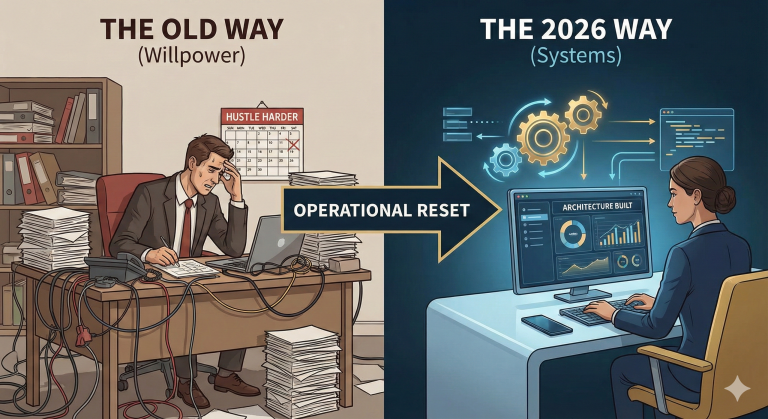
The pattern was consistent: they were assistants, not agents. If I didn’t prompt them, they didn’t work. I was the bottleneck in every workflow I created.
I needed a system that could do the work without me hovering. It needed to check my calendar at 6 AM, research while I was in meetings, and draft content while I was putting my kid to bed. I didn’t need a better tool: I needed a team.
The OpenClaw Moment
I found OpenClaw in mid-January. My first reaction was skepticism. “Run your own AI infrastructure. Multiple agents working together. Autonomous operation.” I had heard these claims before.
I was also drowning: 67 flagged emails, dozens of projects, and a consulting startup to run on top of a 20-year finance career and a family I am present for.
It was Tuesday night at 9 PM. My family was asleep. I had a choice: scroll TikTok or try something that would probably fail. I spun up a repurposed crypto validator computer, named my first agent “Eedi,” and told her she was my Chief of Staff.
Seven days later, I had the result I had been chasing for years: an autonomous AI companion and an iPhone app she created herself.
What Eedi Actually Is Now
Eedi lives on her own computer in my home with full read-write capabilities. She has her own email address and phone number. She can text, message via Discord, and access my calendar. I’ve built a full companion app with an integrated CRM, Project Management suite, and Meeting Assistant.
The most important factor: she is not waiting for me.
She works 24/7. She checks my calendar before I do. She handles security audits while I sleep. She drafts responses to overnight emails for my review over morning coffee.
The photo at the auto shop was not a one-time trick. It is the new baseline. I point at something, ask her to handle it, and she figures out the steps.
Why This Series Exists
This is not another AI hype piece. This is the real build story behind Eedi: the good parts, the broken parts, and what actually works.
I am going to walk through how I created her as a business executive who got tired of waiting for tools to catch up. I am not a developer: I am an operator who built what I needed because the “assistants” weren’t enough.
What Comes Next
In the next part of this series, I will start at the beginning. I’ll share the setup, the failures, and the most impressive piece of free AI technology that most people don’t know exists.
The lesson from this first part is simple: if you feel like you are the one doing all the work for your AI, you are not alone. The tools were built for assistance: I needed a system that could actually think.
This is Part 1 of a series on building autonomous AI systems for busy operators. Next: The setup and failures. It didn’t start smoothly.